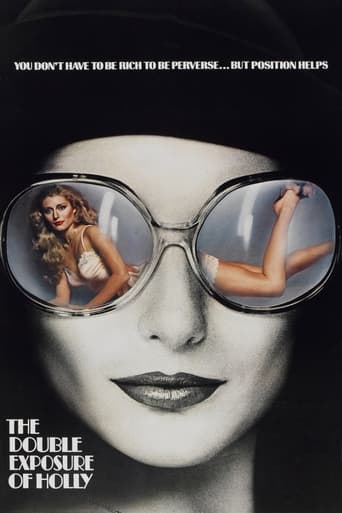
**The elegance of sordidness**
Set in the moral twilight of 1970s New York, “The Double Exposure of Holly” begins when Lee, a respectable high-society lawyer (Ronan O'Casey, known for his appearances on the 1950s family sitcom “The Larkins”), is rejected by Holly, a woman of icy beauty and aloof temperament (the divine Catharine Burgess). Wounded in his pride and consumed by spite, Lee orchestrates a revenge plot disguised as blackmail. To this end, he enlists Nicastro, an old contact with underworld connections, to secretly film the hotel room Holly will use for her clandestine meetings with her lover, a wealthy, married construction magnate, hoping to catch them in a compromising sexual situation.
However, the plan quickly descends into chaos due to the incompetence and moral bankruptcy of those involved. Nicastro delegates the task to Archie, a low-level thug (the great Jamie Gillis, of course), and Kim, his heroin-addicted girlfriend (the unsettling Terri Hall). What began as a cold exercise in control transforms into a spiral of voyeurism, betrayal, and decadence, where the characters' motivations become dangerously intertwined. The film's title, "The Double Exposure," refers precisely to this duality in the protagonists' lives, exposing the sordidness that lies beneath the surface of urban sophistication.
A noir thriller of exceptional technical and narrative quality, directed by Bob Gill (a renowned graphic designer of the time who designed the cover of The Beatles' first album for Apple Records, and who never directed another film), that it stands out for its somber aesthetic and almost palpable nihilistic atmosphere.
Ronan O'Casey not only acts in the film but also wrote this complex screenplay, which transcends linear sequencing to construct a study of obsession and power. It features sharp dialogue and characters with a psychological depth unusual for the genre, far removed from the archetypes of adult films of the time. The shadows of New York and the jazz of Stan Free add a layer of urban melancholy and sophistication that perfectly complements the sex scenes, in which, incidentally, Burgess never engages in explicit sex.
Helpful • 0 0
Read full review →