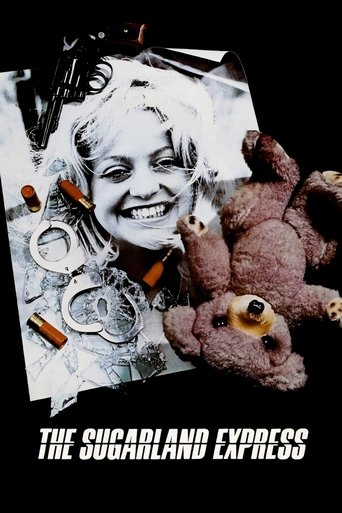
**_Inspired by the real-life incident from May 2, 1969, mixed with…_**
…elements of the Bonnie & Clyde account from 35 years earlier, such as the way Americans were rooting for the couple. In truth, the chase only lasted 5-6 hours and not several days. So, there was no time for the press to get ahold of the story and spread it to the people. Neither did the kidnapped patrolman warm up to the couple.
Furthermore, it didn’t end anywhere near the Rio Grande. The events started in Sugar Land, Texas (two words, not one), which is a town southwest of Houston, with the ensuing actions going counterclockwise around the outskirts of Houston. The actual chase started in Port Arthur with the couple hijacking the patrol care in Anahuac, both of which are east of the metropolis. The pursuit then headed into Dayton, which is northeast of the city, and wrapped up near Navasota, about 75 miles northwest of Houston and 330 miles from the Mexican border.
These changes, and others, can be excused on the grounds that movies always exaggerate real-life events and change things for the purpose of entertainment. Besides, there’s a wink of amusement to the proceedings, which is counterbalanced by a genuine sense of tragedy in the last act.
Goldie Hawn is cute, but too thin, as the foolish and frustrating female instigator. On the masculine side of things Ben Johnson is effective as the police captain while William Atherton (the convict husband) and Michael Sacks (the kidnapped patrolman) are curiously lookalikes.
Most know that this was Spielberg’s first cinematic production after making three television movies, starting with the outstanding “Duel” in 1971. The flick cost $3 million and made over twice that at the box office in USA/Canada and over four times worldwide. It was considered a disappointment but did well enough to give the greenlight to Spielberg’s “Jaws” wherein he knocked it out of the ballpark.
Besides “Bonnie & Clyde” and “Duel,” it came in the tradition of “The Getaway” from fifteen months earlier. “Dirty Mary Crazy Larry” debuted two months later and outdid it on every level. Yet it influenced future movies in ways, like Eastwood’s “The Gauntlet” and the two versions of “The Hitcher” (1986/2007).
It runs 1h 50m and was shot Dec-Mar 1972-1973 in Texas relatively near the actual locations, San Antonio and places east of there, including the town of Sugar Land, whereas the Rio Grande conclusion was filmed a few hours’ drive west of there in Del Rio.
GRADE: B-/C+